
About You
Hello Léa, can you tell us about the birth of Jungle Exquise and what led you to artistic embroidery?
Hello!
Passionate about drawing, painting, thread, and fabric since childhood, I learned to knit, crochet, and embroider with my grandmother. I naturally pursued a high school diploma in Applied Arts.
When I was in my junior year, someone showed me a documentary on Haute Couture. I saw embroiderers at work. And that was a true revelation!
It never left me after that. As soon as I graduated, I began training in artistic embroidery. I later found out that my great-grandmother was also an embroiderer. I created Jungle Exquise in 2016 to express my own universe, which blends 17th– and 18th-century inspirations with a passion for nature.
What does the word “exquise” mean to you in your brand name? Is it a reference to a vision of beauty, detail, or something else?
The word “exquisite” is sometimes defined as “giving a pleasant impression to the senses through its delicacy.” That’s exactly it — subtlety, attention to detail, and a love of beauty. It’s truly a reference to the French arts of the 17th and 18th centuries, which perfectly embody these ideas.
How did you discover artistic embroidery, and how did this craft take root in your life?
Oops! I may have gone into that a bit too much earlier, but I think I’ve said it all!
A textile universe between dreams and precision
How would you describe your artistic style and the emotions you aim to convey through your creations?
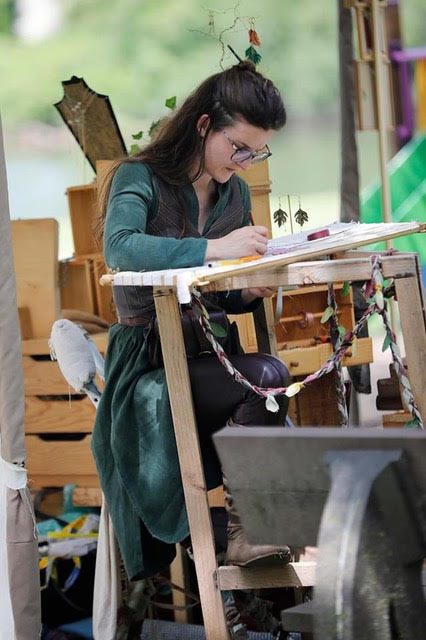
I’d say my universe is dreamlike. I seek to share my vision of nature—both pure and sophisticated—a source of daily wonder for me!
You use techniques such as Lunéville crochet, stumpwork, and cannetille… Could you explain these to someone unfamiliar with artistic embroidery?
What I love about artistic embroidery is the endless possibilities in terms of colors, materials, textures, and even volume. For me, embroidering is like writing—but with a needle or hook instead of a pen! The gestures flow just like words on a page, telling a story that’s meant to be seen and felt.
Where do you find inspiration for your pieces? Does it start with a material, a color, an idea, a piece of music?
Nature is my main source of inspiration. Sunlight filtering through leaves, dew on the grass, misty layers on the horizon… My eyes translate these into entangled threads, beads, and fabric.
Materials, craftsmanship, and commitment
You work with noble, recycled, or local materials. Could you tell us more about your ethical approach in material selection?
Yes, I’m very particular about my raw materials. I studied eco-design for a year, and it really opened my eyes. In today’s world, creating comes with an impact—and the pursuit of beauty and art doesn’t justify everything. I make it a point to use scraps and vintage materials whenever possible. It’s more eco-friendly, yes, but it also gives the creations a soul—and spices up the creative process!
Working with constraints truly boosts creativity…
What is your relationship with slowness, the handmade, and the demands of your craft?
I’m very drawn to Japanese philosophy, which seems to understand this better than we do: it’s the time spent working that gives value to an object.
So yes, a piece made from cardboard can be just as valuable as one made of diamonds—it’s the handwork and craftsmanship that matter! That’s what breathes life into objects.
What does it mean to you to “ennoble” a textile or an object?
It’s exactly that—taking the time! Taking the time to understand the material so you can elevate it.
Creations and collections
Can you tell us about some of your key pieces, like Marqueterie d’or, Orfèvrerie sur papier, or Plumes de Pénélope?
I’m really interested in the history of trompe-l’oeil, because it pushes us to be inventive and to push the boundaries of techniques and materials. And honestly, it doesn’t matter if the result actually tricks the eye—what matters is the creative journey.
Orfèvrerie sur papier is a study of the effects of 18th-century metalwork. The piece is like a “sampler”—a kind of embroidered alphabet used to practice stitches, which eventually became both a test and a framed artwork. Using paper as a base modernizes the classical materials and motifs.
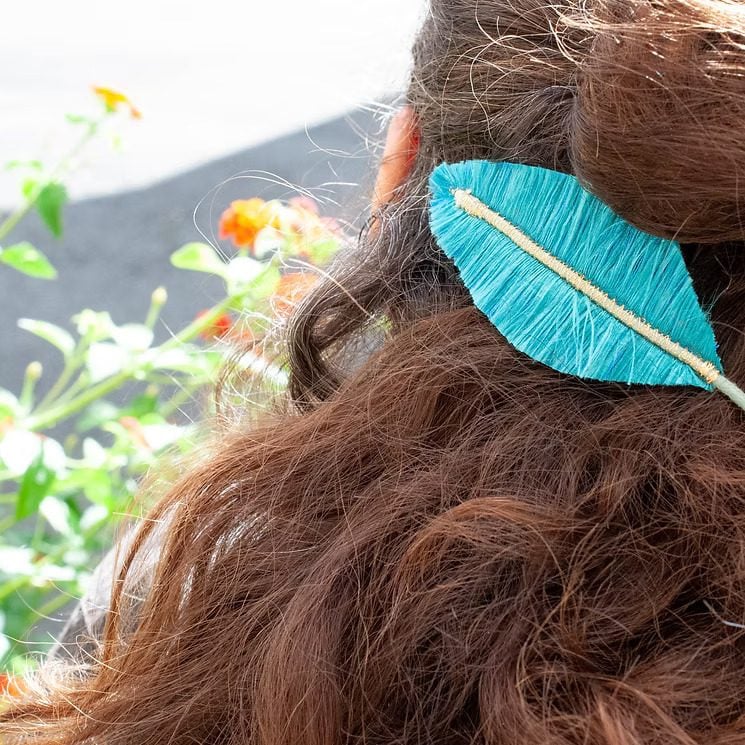
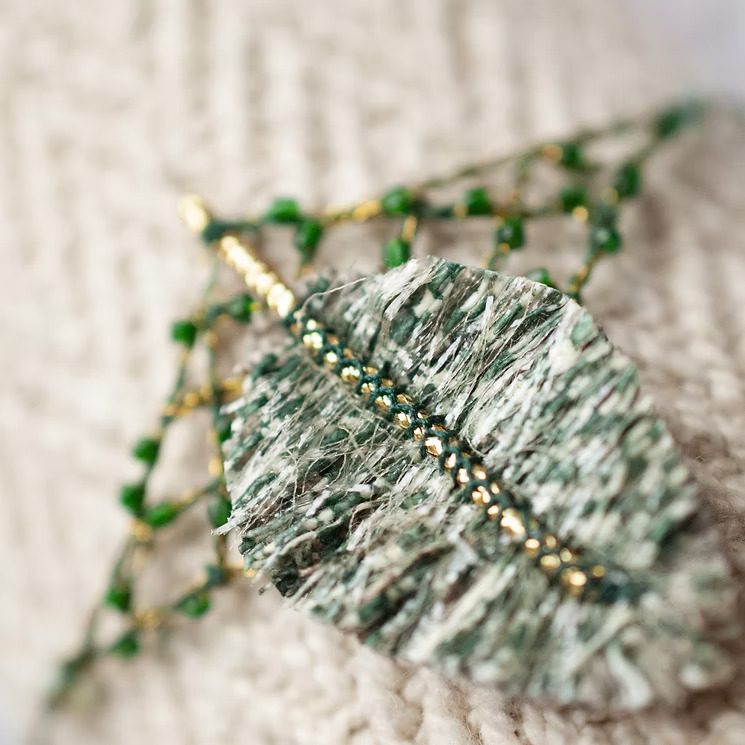
Plumes de Pénélope follows a similar philosophy. But instead of copying real bird feathers, I imagine new birds… it’s the dreamlike, fantastical side of my world. Sometimes the feathers are gilded, like those mounted on inkwells—my mythical bird feathers: phoenixes and more. In the end, trompe-l’œil is just a pretext—why replicate what already exists?
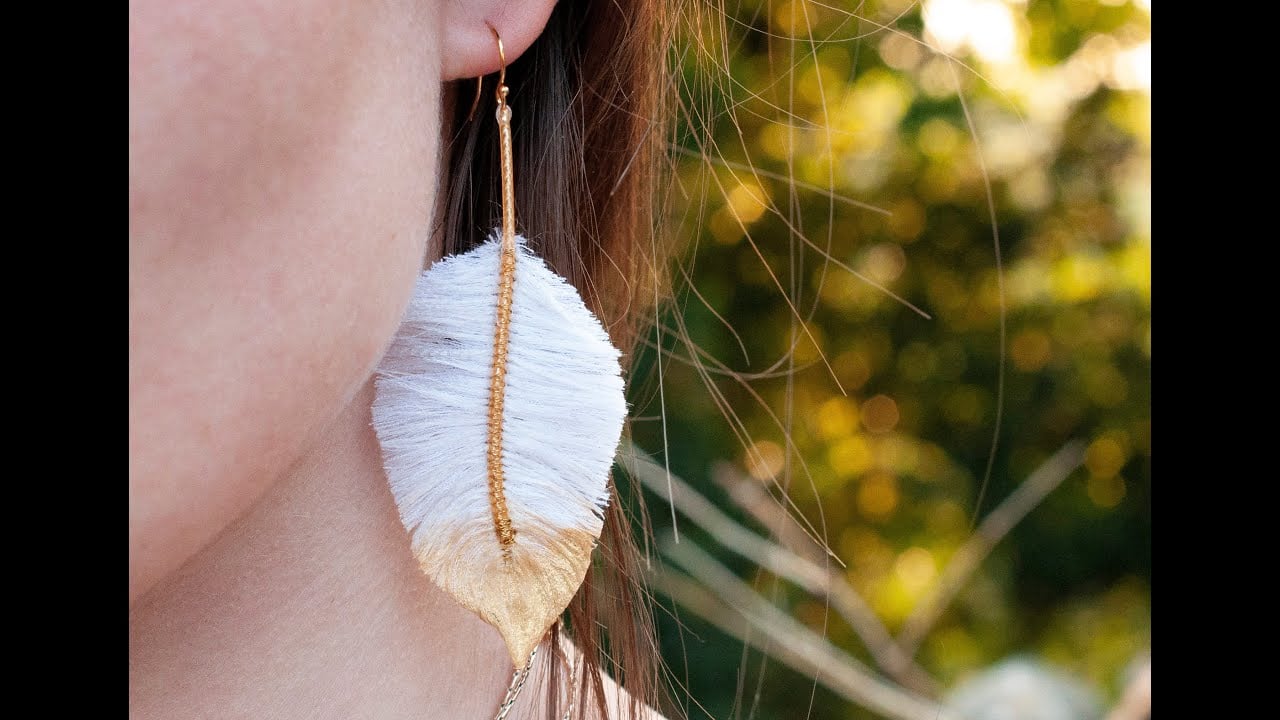
Sure, it’s a technical feat, but for me, art isn’t just about technique.
How do you approach creating a textile jewel or a wall piece: does it stem from a commission, a personal urge, or artistic research?
It usually starts with a personal impulse! I have so many ideas, I don’t have time to make them all… But my universe is quite distinctive—people either love it or don’t. So when I get a commission, it’s usually from someone who already appreciates my style, and they tend to give me full creative freedom. That’s such a gift!
What emotions or reactions do people share when discovering your work?
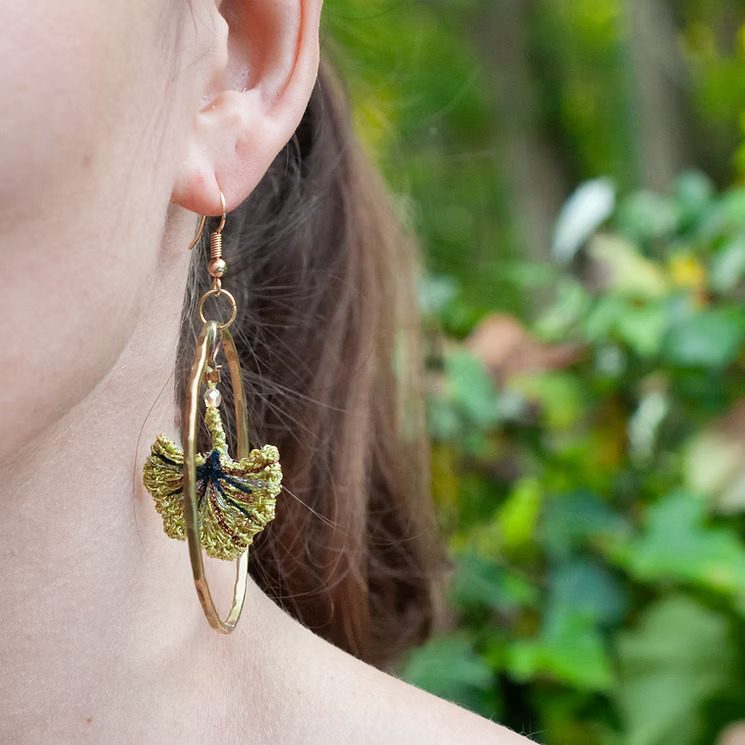
They’re usually drawn into my colorful, high-contrast world. They’re often surprised, because I break the rules when it comes to shapes and color combinations. But when they allow themselves to be swept into the dream, it’s deeply touching and rewarding. My world provokes strong reactions—both ways!
Do you also work on custom orders for individuals or professionals (fashion, décor, set design, etc.)?
Absolutely. I take on all kinds of hand embroidery commissions: garments, accessories, berets, costumes, wall pieces… I regularly create small capsule collections of embroidered berets, and I collaborate with a master tailor for custom outfits as well.
Where can people discover your creations? Do you attend events or offer studio visits?
Some of my jewelry is available at La Manufacture de Bérets in Orthez (64). Otherwise, I travel about once a month for medieval fairs, artisan shows, plant festivals, or Christmas markets (all upcoming dates are on my website and newsletter).
Soon, visitors will be able to see my new workshop—but by appointment only, since I’m often on the road. I also teach embroidery to professional dressmakers.
On top of that, I’m part of the Artelandes association, and I exhibit my embroidery artworks through them several times a year. I have a major exhibition coming up in November at Crédit Agricole in Dax (40).
Daily life as an embroidery artisan
What does a typical day look like at Jungle Exquise?
I start with admin work—there’s a lot to handle: event sign-ups, orders, emails, website, blog, newsletter… Then it’s on to workshop prep, exhibit materials, booth displays, restocking, and custom orders. I juggle between events, classes, and travel! And when there’s time left, I create new pieces. Over the past year, I’ve barely had time for that—which is a good sign—but I do miss it. My days are long and intense!
What are the biggest challenges in making a living from textile arts in France today?
It’s tough, for many reasons. First, with fast fashion, imports, and discount culture, people have forgotten the value of handmade work—and the difference between a higher-priced item you’ll keep for years and a cheap one that falls apart quickly.
People’s reactions to pricing are hard to take at first. You get used to it, though. Another challenge: embroidery isn’t necessarily about the final product—it’s an abstract concept for many. You need to find a niche (like jewelry) or establish reliable, quality collaborations (e.g. in fashion) to reach more clients.
And on the flip side, what brings you joy and satisfaction in your daily work?
Delivering an order and seeing the customer’s emotion—and their trust in me! Watching someone walk into my booth at an event with wide-eyed wonder… And the joy my students feel when they return to embroider with me!
Do you offer classes or workshops to the public?
Once a month, I host an introductory embroidery day at the eco-friendly secondhand store in Mimbaste (40). I welcome beginners, and I have a core group of passionate students who’ve been returning for years. I’m also a certified instructor for AFMA, a training center for professional seamstresses.
To Wrap Up
If you had to describe Jungle Exquise in three words, what would they be?
Jungle Exquise is embroidery as an escape for dreamy minds—because artistic embroidery is far from an old-fashioned pastime!
Embroidery
Escape
Dreamy spirit
What advice would you give a young textile artist or artisan who’s hesitant to get started?
Make sure this is what drives you most! Because it takes daily and long-term sacrifices. You need staying power—sometimes it takes a long time to gain traction. Be flexible, adaptive, resilient—and above all, don’t put all your eggs in one basket! And never let anyone convince you that your craft is useless. In this harsh world, bringing softness and beauty matters deeply.
And finally, what message would you share with future generations to inspire them to preserve textile art?
Textile arts have existed since the dawn of time! Even though society now often sees us as “non-essential,” that hasn’t always been the case. We must defend our ancestral skills—because appreciating beauty is part of what makes us human and empathetic. And today, with all the possibilities for upcycling, we have so many raw materials—“waste” just waiting to be reborn!